

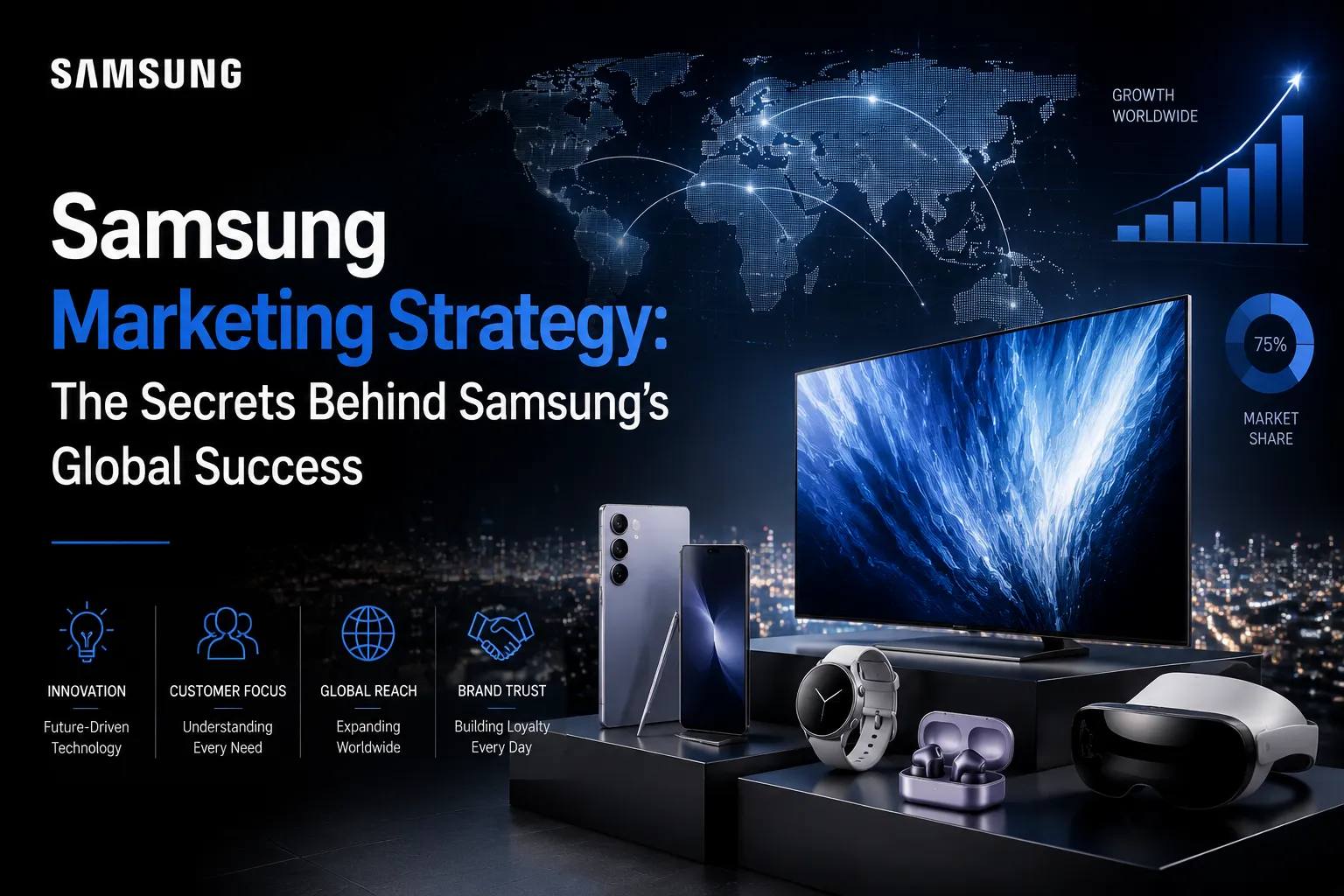
Samsung is one of the best examples of a technology company which has become a powerful globalized brand. And its related marketing strategy is not only about selling smartphones, TVs, and electronic devices; it’s about creating strong connection with customers, building trust, providing good experience for them and finally using innovation to stay ahead of competitors.
It’s good to know that Samsung firstly started as a small trading company in South Korea in 1938 and gradually turned into one of the most famous technology companies around the world. According to the investigation of Karina Web team, this success is due to some cases such as continuous innovation, smart branding, effective digital marketing and understanding customer’s needs.
Innovation as the foundation of Samsung marketing strategy
One of the most important parts of Samsung marketing strategy is innovation. Samsung invests heavily in development to create product that match new needs and expectations of customers.
Samsung usually focuses on creating products that are worthwhile and different from other competitors such as Galaxy smartphone and foldable devices we have seen before.
This company doesn’t only develop technical features; but it explains how people’s daily lives can improve with that product. For instance, Samsung Galaxy Z series showed us how a technology company be able to mix technology with daily lifestyle. Moreover, this company created an emotional connection with users by producing of foldable smartphones as flexible and modern devices.
Samsung Market Segmentation and Targeting Strategy
A major reason behind Samsung’s success in these all years is the ability to understand different customer groups. Samsung company knows that customers have different budgets, lifestyles, and needs.
So, instead of offering only premium products with high prices, Samsung creates products for various market segments. For example:
- Premium customers (these customers are willing to pay more for advanced technology and features) can choose Galaxy S and Galaxy Z series.
- Mid-range users (they want good features but may have a more limited budget) can choose Galaxy A series.
- Business users (these customers need technology for work) can use professional Samsung solutions.
This market segmentation strategy allows Samsung to reach a wider group of audience and compete with different markets worldwide.
Samsung digital marketing strategy
Digital marketing has an important role in Samsung’s global growth. This company uses social media, online advertising, influencer marketing, and creative campaigns to connect and communicate with customers.
This strong online presence helps Samsung increase brand awareness and keep in touch with millions of customers worldwide.
Samsung branding strategy and customer experience
Samsung’s branding strategy basically focuses on innovation, quality and reliability. This company tries to create a high authorized, modern, technology-based brand.
Customer experience is another important part of Samsung marketing strategy. Samsung concentrates on making its products easy to use, visually attractive and connected with each other. This company aims to provide an enjoyable experience for customers from using smartphones and tablets to connecting smart watches and other devices.
Samsung pricing strategy

Samsung uses a smart pricing strategy to be selected from different groups of customers. And this is due to the fact that the company adjusts its prices based on the features, quality, and value that each product provides.
For example, Samsung’s premium products, such as the Galaxy S and Galaxy Z series, usually have higher prices because they include advanced technology, modern designs, and special features. However, Samsung also offers more affordable products, such as the Galaxy A series, for customers who want reliable devices at a lower price.
When this brand offering products at different price levels, surely it can attract more customers and compete successfully in various markets around the world.
Samsung distribution and global presence
Another significant part of Samsung marketing strategy is its strong distribution network. Samsung products are available in official stores and online platforms worldwide.
This broad distribution system allows customers to access Samsung’s products in different countries very easily.
Why Businesses Need a Strong Digital Marketing Strategy
The success of Samsung shows that having a great product is not really enough. Businesses also need professional branding, digital marketing, and a strong online presence plus good online advertising.
Companies today need websites that present their brand in today’s online world. A well-designed website can help businesses attract customers and increase sales.
Karina Web helps businesses build professional digital identities through services such as website design, UI/UX design, and SEO solutions. A strong website combined with effective marketing strategies can help brands compete in today’s digital world.
Lessons Businesses Can Learn from Samsung Marketing Strategy

Samsung’s success provides valuable lessons for other companies:
- Understand your customers before creating products.
- Invest in innovation and quality.
- Build a strong brand identity.
- Use digital platforms effectively.
- Create long-term relationships with customers.
For more information about branding and marketing principles, these reliable resources can be useful:
American Marketing Association
Conclusion
Samsung Marketing Strategy is a combination of innovation, customer understanding, digital marketing, and strong branding. Samsung became a global technology leader because it focused not only on products but also on customer emotional connections with customers.
Based on Karina Web, the biggest lesson from Samsung is that successful brands must continuously adapt, listen and understand their audience, and create value beyond the product itself. By applying these strategies, businesses can improve their online presence and build stronger relationships with customers which is the secret of making a brand like Samsung.