
In this news report on Karina Web, we cover a significant development in the field of AI and chatbot platforms. OpenAI’s annual developer conference, DevDay, kicked off with a bang as co-founder and CEO Sam Altman announced a new Apps SDK (Software Development Kit) that makes it “possible to build apps inside of ChatGPT.” The SDK also includes support for paid apps, which companies can charge users for using OpenAI’s recently unveiled Agentic Commerce Protocol (ACP).
In essence, instead of launching apps one-by-one on your devices, users can now perform all those actions without ever leaving ChatGPT. This feature allows the user to log into their accounts on external apps, bring their information back into the chat, and use the apps very similarly to how they already do outside the chatbot. The key difference is the ability to ask ChatGPT to perform specific actions, analyze content, or go beyond what each app could offer on its own. Altman stated: “This will enable a new generation of apps that are interactive, adaptive, and personalized, that you can chat with.”
Technology and App Integration
The Apps SDK is built on the open-source Model Context Protocol (MCP) standard. It allows third-party developers to connect selected data, “trigger actions, and render a fully interactive UI [user interface].” The SDK includes a “talking to apps” feature that allows ChatGPT and its underlying models to obtain updated context from the third-party app or service, ensuring the model is always aware of the user’s current interactions.
Apps built with the SDK can appear in three primary display modes within the chat interface:
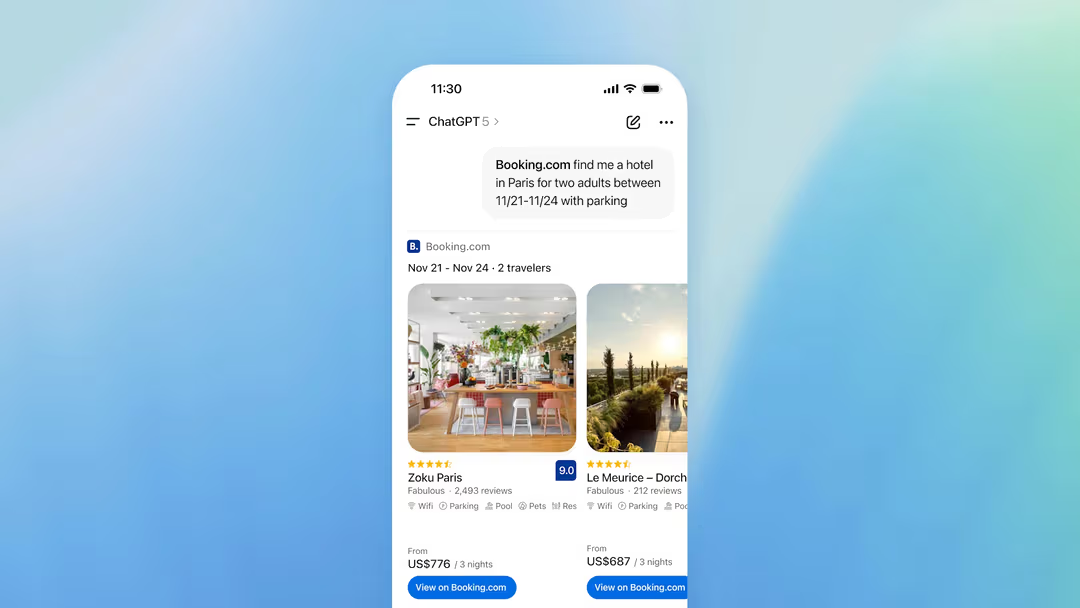
- As lightweight cards or carousels directly inline in the chat.
- Expanded to fullscreen for immersive tasks like maps or slide decks.
- Utilizing picture-in-picture for live sessions such as video or games.
Early Integrations and Partners
OpenAI showcased early integrations with external apps, including Coursera (e-learning), Canva (cloud design software), and Zillow (real estate listings). Altman also announced integrations with partners not officially demoed, such as Booking.com, Expedia, Figma, and Spotify, with more upcoming partners noted in documentation, including AllTrails, Peloton, OpenTable, Target, theFork, and Uber.
The Coursera demo showed a user simply asking, “Coursera can you teach me something about machine learning?”, which launched the app’s interface within the chat. Educational videos could be pinned to the top of the screen in a picture-in-picture view, allowing the user to continue a text dialogue with ChatGPT while watching. The user could then ask follow-up questions about the video’s content, and the AI model would automatically analyze the relevant portion of the video to provide an informed text response.
The Canva example demonstrated how a user could ask ChatGPT to generate a poster using specific design guidance (font, color, style) based on a previously discussed business idea. ChatGPT issued the commands and performed the design actions in the background, displaying the resulting poster designs directly within the user’s chat session.
In the Zillow demo, a user first asked ChatGPT to suggest a city for business expansion (referencing an old conversation via the optional memory feature). The user then typed “Zillow” and asked to “show me some homes for sale there,” which brought up an interactive map from Zillow with listings and prices, all inline within ChatGPT.
Privacy, Safety, and the Conversational Ecosystem
OpenAI emphasized that apps must adhere to strict privacy, safety, and content standards to be listed in the ChatGPT directory. Apps must respect user privacy, limit data collection to only what is necessary, serve a clear purpose, and be safe for general audiences, including teens aged 13–17. Every app is required to have a clear, published privacy policy and obtain user consent before connecting.
By opening ChatGPT to third-party apps and payments, OpenAI is taking a monumental step toward making the platform a new AI Operating System—one that blends conversational intelligence with rich interfaces and embedded commerce. For developers, this means direct access to over 800 million ChatGPT users. For users, it means a new generation of apps they can chat with, where a single interface helps them with tasks like booking a flight, designing a slide deck, or learning a new skill without ever leaving the core ChatGPT environment.