

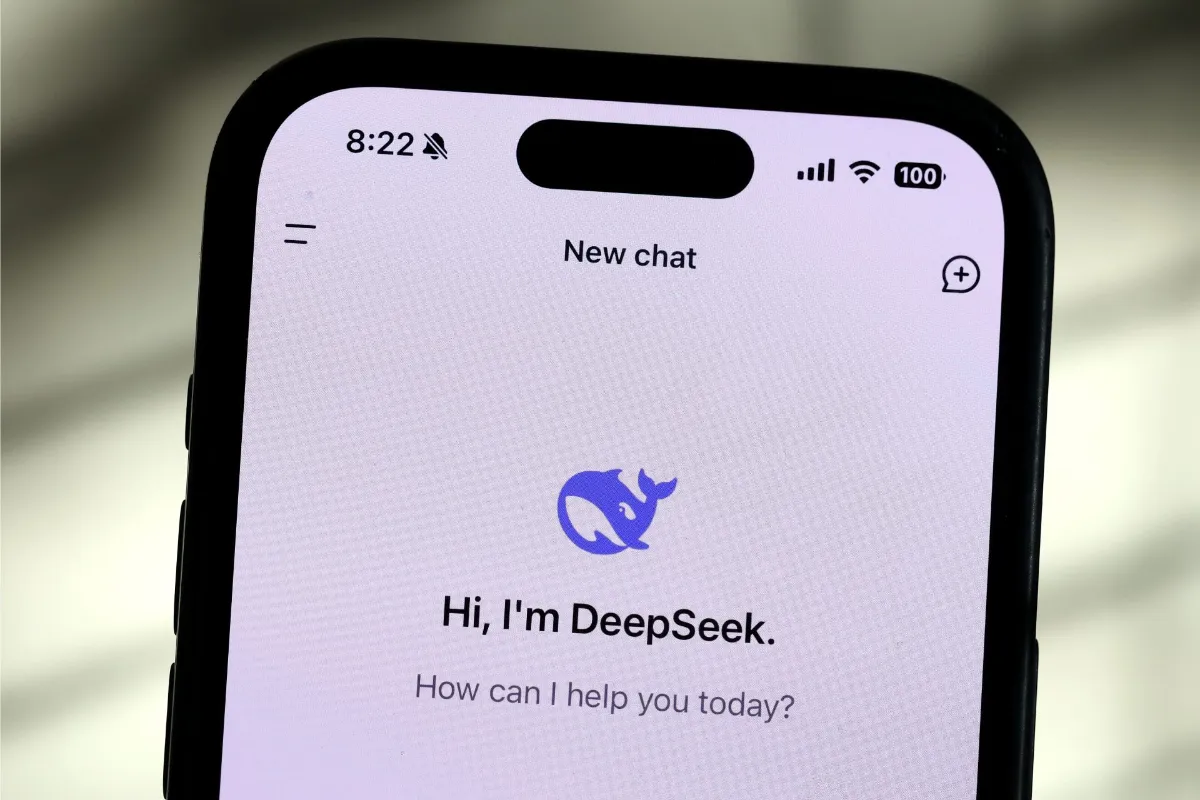
A full year has passed since DeepSeek first disrupted the global AI market with a model that defied expectations. The company has now returned, not merely to echo previous success, but to elevate the industry’s standards once again. With the announcement of DeepSeek V3.2 and DeepSeek V3.2-Speciale, the company is making a direct, unapologetic challenge to industry giants, most notably GPT-5 from OpenAI and Gemini 3 Pro from Google.
DeepSeek asserts that its new models excel at advanced reasoning, multi-step task solving, and processing long, complex inputs. These claims come at a moment when competition in the generative AI world is tighter than ever, and incremental gains can lead to massive market shifts. The key question now is whether DeepSeek has once again found a way to tilt the balance of power.
DeepSeek’s Philosophy: Efficiency Over Excess
One of the most compelling aspects of DeepSeek’s strategy is its clear divergence from the American trend of “bigger is better.” While companies like OpenAI, Google, Anthropic, and Meta continue racing toward massive GPU clusters, trillion-parameter models, and billion-dollar compute budgets, DeepSeek’s approach is centered on efficiency and hardware accessibility.
This is not a marketing slogan. The cost of training frontier-level AI models has soared in the past two years, affecting not only the compute itself but also the infrastructure, cooling systems, networking bandwidth, and long-term deployment energy demands. DeepSeek’s message is clear: high-level intelligence should not require high-level hardware.
If DeepSeek can genuinely deliver comparable performance using far fewer resources, it will democratize advanced AI capabilities on a global scale. This may be the single greatest reason the industry is watching the company so closely.
DeepSeek V3.2: A Standard Model That Redefines “Standard”
The V3.2 model, now publicly available through DeepSeek’s website, mobile app, and API, sets a new baseline for what a “standard” AI model can do. Unlike many competitors, V3.2 includes tool-augmented reasoning support by default, without requiring a separate mode or special API endpoint.
This means V3.2 is inherently capable of engaging with external tools, writing and debugging code, performing mathematical analysis, and solving complex reasoning problems. More importantly, the model is designed to run efficiently on more accessible hardware, making frontier-level performance possible for a broader segment of developers and institutions.
The significance of this cannot be overstated. If powerful reasoning becomes accessible without elite hardware, the global AI development landscape changes overnight.
V3.2-Speciale: A Direct Challenge to the Summit
The spotlight, however, is firmly on DeepSeek V3.2-Speciale, a temporary experimental model available only through a limited-time API until December 15, 2025. Unlike V3.2, this model does not yet support tools and is exclusively positioned as a high-end reasoning engine. But according to DeepSeek, that engine may already be outperforming OpenAI’s newest flagship model.
The company states that V3.2-Speciale:
- surpasses GPT-5 in internal benchmarks, and
- matches Gemini 3 Pro in demanding reasoning tasks.
To substantiate this, DeepSeek has published the model’s solutions to the 2025 International Mathematical Olympiad (IMO) and the International Olympiad in Informatics (IOI). These two competitions have become informal battlegrounds for “super-reasoner” AI models, and they serve as valuable proxies for evaluating deep mathematical and algorithmic understanding.
If external evaluations confirm DeepSeek’s claims, this model may represent one of the most significant jumps in AI reasoning capability in recent years.
Two Breakthroughs Powering DeepSeek’s Leap
DeepSeek attributes its performance jump to two major innovations: a custom sparse-attention system and an extensively automated reinforcement learning pipeline.
A Custom Sparse-Attention Mechanism
One of the core bottlenecks in modern LLMs remains the quadratic cost of dense attention on long sequences. While competitors have introduced methods like FlashAttention, mixture-of-experts routing, and hybrid attention layers, DeepSeek claims its Sparse-Attention mechanism significantly reduces compute costs while preserving, and in some cases enhancing, structural understanding of long documents.
By selectively ignoring low-value input segments and focusing compute power on critical parts of the prompt, the model performs closer to a frontier-scale LLM without requiring frontier-scale hardware.
Reinforcement Learning Across 85,000 Complex Tasks
The second pillar is DeepSeek’s extensive use of reinforcement learning. More precisely, an agent-driven task generator created over 85,000 multi-step reasoning tasks, covering logic, mathematics, coding, and error-correction pipelines.
This scale of reinforcement learning places DeepSeek in the same category as research leaders like DeepMind, which pioneered similar agent-based RL environments for algorithmic reasoning.
What makes this important is not merely the number of tasks, but the structure: multi-stage reasoning requires the model to form hierarchical plans, a skill that differentiates true reasoning engines from basic language predictors.
Why These Advances Matter
The significance of DeepSeek’s new models becomes clearer when viewed at the ecosystem level. If the company has indeed achieved high-performance reasoning with lower compute requirements, several potential consequences emerge:
First, the global AI race enters a new phase, one where efficiency, not sheer model size, becomes the central driver of progress.
Second, countries and institutions lacking billion-dollar infrastructure may finally gain access to frontier-level AI systems.
Third, Western AI companies may be forced to rethink their strategies, accelerating their shift toward efficiency and architectural innovation.
In an industry constrained by GPU shortages, energy costs, and scaling limitations, such shifts could have far-reaching impact.
Availability and Timeline
As of now, DeepSeek V3.2 is publicly available across all standard platforms. The V3.2-Speciale model, however, remains a temporary preview accessible only via a dedicated API until December 15, 2025 (24 Azar 1404).
This controlled rollout mirrors the strategies of major AI labs that test advanced reasoning models with a smaller audience before wider release. It allows DeepSeek to collect structured feedback while limiting the exposure of an unfinished system.
Conclusion: Can DeepSeek Reshape the Future?
DeepSeek’s comeback with the V3.2 and V3.2-Speciale models sends a clear message to the world: achieving frontier-level AI no longer requires massive budgets, colossal GPU clusters, or ever-expanding architectures. Through innovation in attention mechanisms and reinforcement learning, the company proposes an alternative path for the industry, one where progress is driven by intelligence, not just scale.
In this Karina Web news report, we examined the strategy, technology, and implications of DeepSeek’s latest announcement. And while the final verdict awaits independent benchmarks, one thing is certain: DeepSeek has made clear that the race for the future of AI is far from settled. Each breakthrough has the potential to rewrite the rules, and DeepSeek may once again be the company forcing the industry to adapt.
Source: deepseek.com