

A Turning Point for Android’s Evolution
Google’s newest Android 16 update is more than just another incremental upgrade, it represents a strategic transformation in how the company approaches its mobile ecosystem. Historically, Android users received a major system update once a year, peppered with small feature drops along the way. With Android 16, Google is formalizing a new model: features will now arrive continuously, whenever they are ready, rather than waiting for a yearly milestone.
This shift in philosophy is significant. In a competitive global environment where mobile operating systems increasingly differentiate themselves through rapid innovation, Google’s move signals its intention to stay ahead. Android now aligns more closely with modern software development practices, where flexibility and fast deployment are central to the user experience. The company is clearly steering Android toward becoming an ever-evolving service rather than a static product refreshed annually.
In this report for Karina Web, we not only unpack the official announcements but also analyze the implications of these changes for users and the broader tech landscape.
Reinventing Notifications with AI: Designed for Focus
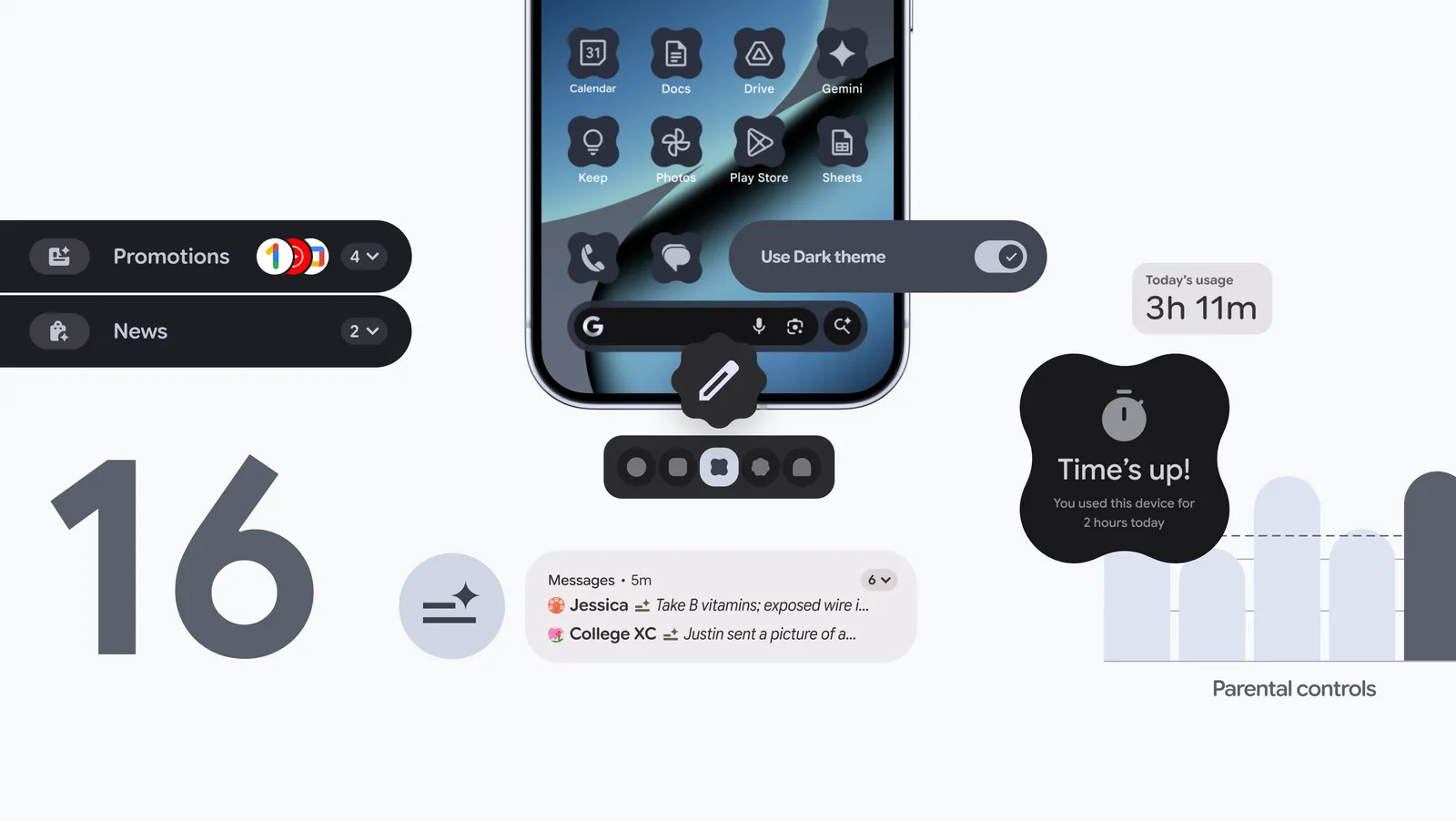
One of the most notable upgrades in Android 16 centers on the notification system, an area where users have long demanded better organization and less noise. Google’s response comes in the form of two new AI-powered tools engineered to reduce distraction and increase clarity.
The first of these, AI-powered Notification Summaries, condenses lengthy messages and active group chats into concise summaries. This enables users to understand the main idea of their incoming messages at a glance, without having to open multiple apps or scroll through dense conversations. With the rise of AI across Google’s ecosystem, especially through its Gemini platform, this enhancement is a natural extension of the company’s AI-first vision.
The second feature, Notification Organizer, introduces intelligent categorization. Android now automatically identifies low-priority alerts such as promotional emails, news alerts, or social media pings and groups them silently. Instead of dozens of scattered interruptions throughout the day, users get a cleaner, more focused notification system that surfaces only what matters most.
These changes are not simply cosmetic improvements. Digital-wellbeing researchers have repeatedly found that excessive notifications are one of the leading contributors to cognitive overload. Recent studies, such as those from UC Irvine, indicate the average smartphone user interacts with notifications more than 50 times per day. Android 16’s AI-driven approach directly tackles this issue, giving users the ability to reclaim their attention without sacrificing essential information.
A More Expressive Device: Personalization at a New Level
Android 16 also brings a substantial expansion of customization features, allowing users to shape their device’s appearance with even more nuance and creative freedom.
Google has introduced custom icon shapes, giving users control over visual style in a way that aligns with the personalization philosophy introduced through Material You. Whether someone prefers geometric precision or softer rounded visuals, Android now allows the home screen to reflect individual taste.
A second highlight, Themed Icons Applied Automatically, ensures cohesive visual design across apps, even if some app developers have not yet adopted the standardized theme. Android intelligently applies a matching aesthetic to maintain a unified look throughout the system. This greatly reduces visual inconsistency, one of the most common complaints about Android’s historically varied design landscape.
Another major enhancement is the expanded dark theme. Android 16 now automatically darkens light-themed apps even if those apps do not offer a built-in dark mode. This has technical and practical benefits: OLED displays consume less power when showing darker colors, and reduced brightness is easier on users’ eyes, particularly in low-light environments. Studies in human–computer interaction continually show that darker interfaces can reduce eye strain and support more comfortable nighttime device usage.
Collectively, these changes represent one of Android’s most personal and visually polished updates yet.
Family-Centered Design: A Smarter and Stronger Parental Controls Hub
A central part of Android 16’s vision is empowering families with more control, transparency, and ease of use. Google has redesigned parental controls from the ground up, introducing a unified hub directly inside the device’s settings. This eliminates the fragmented experience of switching between system settings and external apps.
This new on-device parental control center, protected by an easy-to-set PIN, brings together core tools in one straightforward interface. Parents can now:
- Set daily screen-time limits to help young users maintain healthy habits
- Configure downtime schedules that automatically lock the device at night
- Limit or block specific apps, tailoring digital access to age-appropriate boundaries
- Grant additional time when needed, such as for school assignments or special cases
Beyond the built-in tools, the redesigned hub connects seamlessly to Google Family Link, which offers expanded features such as location alerts, app-purchase approvals, and the School Time mode. This tighter integration reflects Google’s understanding that as children’s digital activity increases, parents need a management system that is both powerful and easy to navigate.
Google has been steadily expanding its child-safety ecosystem for years, but Android 16 marks the most streamlined and family-friendly iteration yet. The experience is now unified, secure, and intuitive, addressing one of the longtime pain points for parents managing multiple devices.
Rolling Out to Users and Setting the Stage for the Future
According to Google’s announcement, these Android 16 updates have already begun rolling out to eligible Pixel devices, with other manufacturers expected to follow over time. What makes this release especially notable is that it represents only the beginning of a new continuous-update model.
Users can expect more frequent feature injections throughout the year, rather than waiting for a monolithic update. As a result, Android’s innovation cycle becomes smoother, faster, and more responsive to feedback. This aligns Android more closely with modern cloud-based software ecosystems, where features are delivered the moment they’re stable, rather than when the calendar dictates.
Conclusion: Android 16 Signals a Confident New Phase for Google’s Mobile Platform
Android 16 stands out not simply because of its new features but because of what it symbolizes for the platform’s future. AI now sits at the heart of the user experience, whether organizing notifications or shaping how information is delivered. Personalization reaches unprecedented depth, giving users genuine creative control over how their device looks and feels. Family tools have been thoughtfully redesigned to empower parents while simplifying digital management.
But perhaps the most transformative change is Google’s shift to a continuous release model. This ensures that Android evolves week by week, becoming a dynamic and adaptable platform capable of keeping pace with rapid industry developments.
In this news report for Karina Web, we examined not only the features themselves but also their broader impact on the mobile landscape. Android 16 marks the beginning of a more fluid, more intelligent, and more human-centered era, one in which smartphones become true companions, adapting proactively to users’ lifestyles rather than the other way around.
If you’d like, I can also prepare a shorter social-media-ready version, an SEO-optimized version, or a headline-focused editorial edition.
Source: blog.google