

A Quiet Year for Launches, a Loud Year for Problems
At first glance, 2025 appeared to be a relatively calm year for the PC hardware industry. Neither Intel nor AMD introduced a new generation of desktop processors, and expectations for groundbreaking consumer products gradually faded. However, beneath this surface-level calm, the market was dealing with deep structural problems. Supply chain pressures, strategic decisions driven by artificial intelligence demand, and unresolved technical issues from previous years all converged, turning 2025 into a year defined more by crises than innovation.
For everyday users, gamers, and system builders, the year became a reminder that technological stagnation does not necessarily mean stability. In many cases, the absence of new products only magnified the impact of existing weaknesses across the hardware ecosystem.
The Global RAM Crisis: When Upgrading Became a Luxury
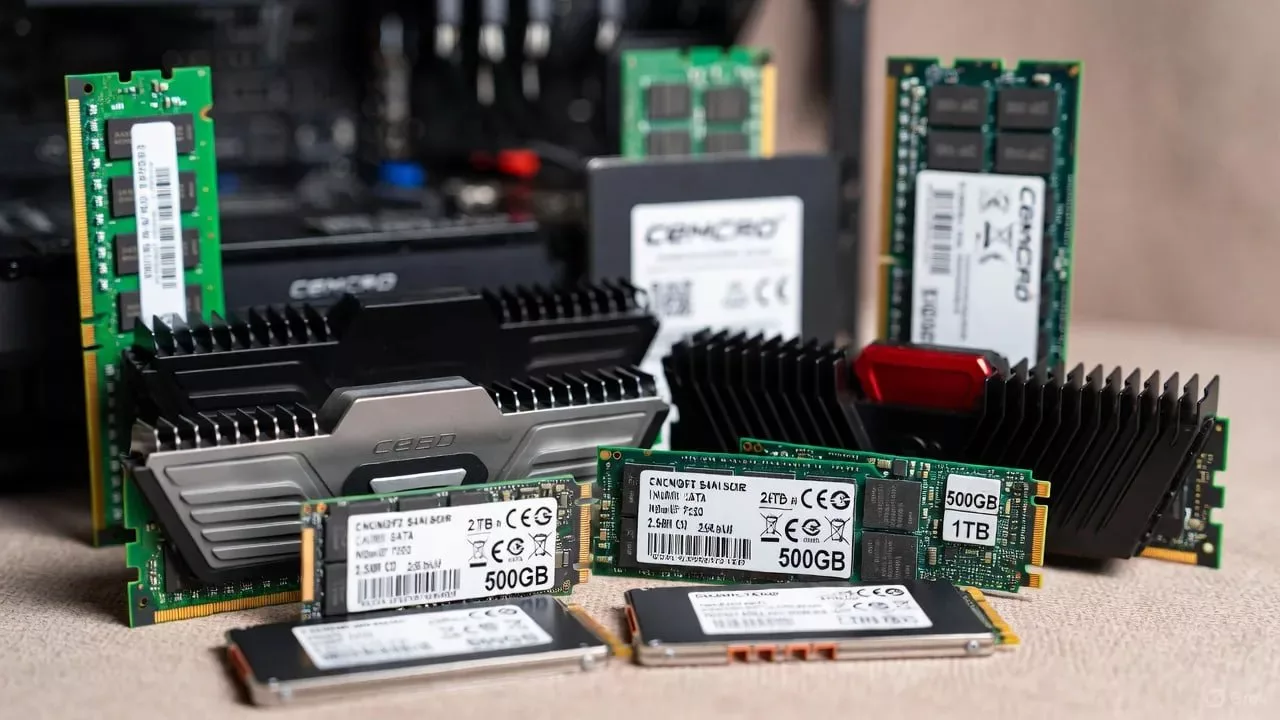
One of the most damaging issues of 2025 was the global RAM crisis. Unlike a defective product or a failed launch, this problem affected nearly every segment of the market. The explosive growth of enterprise infrastructure, cloud computing, and especially artificial intelligence workloads dramatically increased demand for high-capacity memory. As a result, major memory manufacturers prioritized enterprise clients over the consumer market.
The consequences were immediate and severe. DDR5 memory prices surged to unprecedented levels. For example, 32 GB DDR5-6000 kits that previously sold for around 80 to 100 US dollars skyrocketed to prices between 350 and 450 dollars. This increase effectively froze the consumer upgrade market. Many users postponed planned system upgrades indefinitely, while others abandoned them altogether.
Industry analysts warned that this was not a short-term disruption. Projections suggested that the RAM shortage could persist until at least 2028, driven by sustained AI investment and limited expansion in memory fabrication capacity. In this report for Karina Web, the RAM crisis stands out as one of the clearest examples of how enterprise demand can reshape, and destabilize, the consumer hardware landscape.
RTX 5070: High Expectations, Underwhelming Reality
Among NVIDIA’s RTX 50-series graphics cards, the RTX 5070 attracted the most attention from gamers. With a base price of 549 dollars, it appeared to be a reasonable alternative to the much more expensive RTX 5080 and RTX 5090. NVIDIA further fueled excitement by suggesting that the RTX 5070 would deliver performance close to that of the flagship RTX 4090.
Independent reviews quickly challenged that narrative. Benchmarks showed that the RTX 5070 was only slightly faster than the older RTX 3090 and lagged behind the RTX 4090 by roughly 40 percent. For many users, this performance gap made the card feel less like a generational leap and more like a modest refresh.
Criticism intensified when it became clear that the RTX 5070 shipped with just 12 GB of VRAM. In a market where modern games increasingly demand larger memory buffers, this specification was widely seen as inadequate for a mid-to-high-end GPU in 2025. Many enthusiasts argued that at least 16 GB of VRAM should have been standard at this price point, but NVIDIA chose to reserve higher memory capacities for its premium models.
Defective RTX 50-Series Hardware: A Blow to NVIDIA’s Reputation
Performance disappointment was not the only problem facing NVIDIA. In February 2025, the company officially confirmed that a portion of its RTX 50-series graphics cards had shipped with hardware defects. According to NVIDIA, certain units of the RTX 5090, RTX 5090D, RTX 5080, and RTX 5070 Ti were missing some of their ROP (Raster Operations Pipeline) units.
ROP units play a critical role in writing pixel data to the frame buffer, and their absence can negatively affect rendering performance. NVIDIA stated that approximately 0.5 percent of cards were affected, but the company did not provide a clear explanation for how the defect occurred.
Given NVIDIA’s recent history, including controversies over melting power connectors, aggressive AI marketing claims, and persistent VRAM limitations, this admission further damaged consumer confidence. Even if the defect rate was relatively small, the lack of transparency raised concerns about quality control at a time when GPU prices remained historically high.
Burned AMD Processors on ASRock Motherboards
While NVIDIA dealt with its own setbacks, AMD faced a serious crisis within its ecosystem. Numerous user reports surfaced describing systems that failed to boot, burned AM5 sockets, and in some cases completely destroyed Ryzen 7 9800X3D processors when paired with ASRock motherboards. The number of reported incidents exceeded one hundred, drawing widespread attention from both the media and hardware experts.
ASRock responded by releasing a BIOS update and claimed that the root cause was memory incompatibility. AMD echoed this explanation, suggesting that RAM issues may have contributed to the failures. However, several reports described visible physical damage to both the CPU and the socket, indicating that the issue went beyond simple memory instability.
Many affected users believed that motherboard BIOS settings were pushing components beyond safe voltage or thermal limits. Although AMD promised to repair or replace damaged processors, the incident undermined the perception of reliability that the company had built in recent years, particularly among enthusiasts who trusted the AM5 platform.
The Continued Use of 8 GB VRAM in 2025
Another controversial trend that persisted throughout 2025 was the continued release of graphics cards with only 8 GB of VRAM. Despite years of warnings from developers and hardware analysts, both NVIDIA and AMD introduced so-called “budget” models such as the RTX 5060, RTX 5060 Ti, and RX 9060 XT with limited memory capacity.
In practice, these cards struggled even at 1080p resolution in many modern games. Insufficient VRAM led to texture pop-in, incomplete asset loading, frame rate drops, crashes, and in some cases an inability to launch certain titles at all. For users affected by the global RAM and VRAM shortages, the situation felt especially frustrating.
With reports indicating reduced VRAM supply to board partners and no immediate relief from memory constraints, experts expressed little optimism for rapid improvement. The gap between real-world gaming requirements and manufacturer design choices remained a defining issue of the year.
Conclusion: Lessons from a Difficult Year
The PC hardware market of 2025 serves as a case study in how technological ecosystems can struggle even in the absence of major product launches. From the lingering effects of the pandemic and the rise of cryptocurrency mining to the overwhelming influence of artificial intelligence, the industry faced relentless pressure from multiple directions.
Rather than being remembered for innovation, 2025 is likely to be remembered for its failures, shortages, and broken expectations. For consumers, it reinforced the importance of careful research and skepticism toward marketing claims. For manufacturers, it delivered a clear warning: transparency, quality control, and genuine alignment with user needs are no longer optional.